
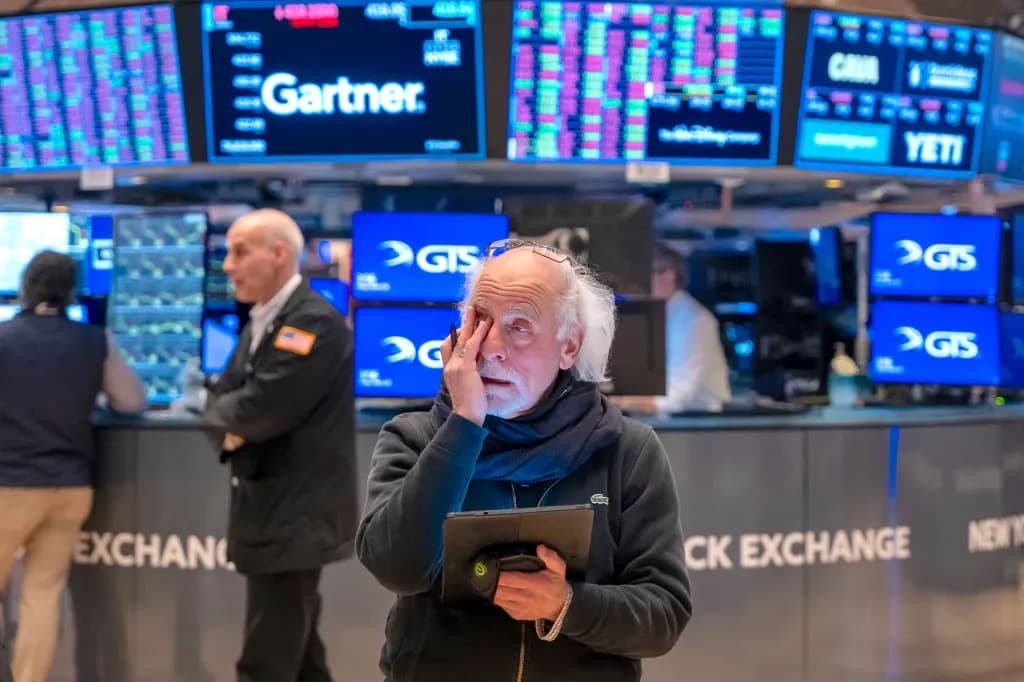
Global stock markets are sliding as bond yields push to levels not seen since 2023, a combination Fortune describes as a genuinely new era of risk for investors. S&P 500 futures fell 0.59 percent this morning, adding to a 0.48 percent decline the day before. The selling was global in scope: Europe's Stoxx 600 dropped 0.84 percent and the UK's FTSE 100 fell 0.68 percent, while in Asia, South Korea's KOSPI slid 0.85 percent and India's Nifty 50 lost 0.94 percent.
The bond market move sitting behind the selloff is significant on its own. The 10 year Treasury yield climbed to 5.03 percent and the 30 year reached 5.39 percent, both levels that have not traded this high since 2023 and that mark a threshold investors watch closely as a signal of how much risk they are pricing into US government debt.
Much of the pressure traces back to the ongoing conflict between Iran and the US, which has pushed oil prices above $100 a barrel, with Brent crude trading at $107 this morning. Higher oil feeds directly into inflation expectations across the broader economy, and Richard Saperstein, chief investment officer at Treasury Partners, warned that rising bond yields driven by unchecked inflation can put real pressure on the stock market on top of whatever direct effect oil prices have on consumers and businesses.
The stakes extend well beyond a single bad trading session. Rising rates threaten to raise the cost of the roughly $1 trillion in AI related capital spending expected this year, since higher yields make corporate borrowing more expensive right as companies are trying to fund massive data center and infrastructure build outs. Compounding the pressure, inflation has now sat above the Federal Reserve's 2 percent target for five consecutive years, pushing bond investors to demand a higher risk premium on long dated securities and making it that much harder for yields to come back down even if oil prices eventually ease.