
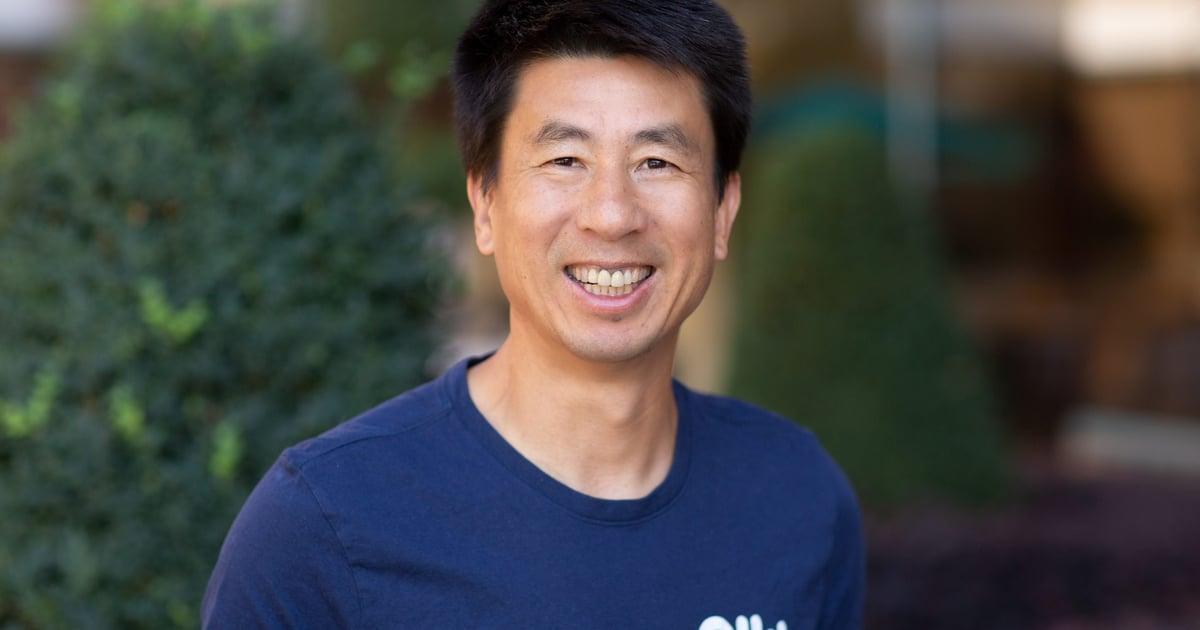
Sam Liang, the chief executive and co-founder of Otter.ai, arrived in the United States with a language barrier and a determination to learn. Unable to follow his professors at first, he took a Sony Walkman to every lecture, recorded the classes, and replayed the tapes until the words made sense. That habit would later become the foundation of a company that has transcribed more than one billion meetings for over 40 million users.
Liang grew up in China during and after the Cultural Revolution, when even food was rationed. Despite the scarcity, he dreamed of studying in America. He enrolled at the University of Arizona and later earned a PhD at Stanford, where his faculty advisor was David Cheriton, the computer science professor famous for mentoring Larry Page and Sergey Brin and writing them the $100,000 check that helped launch Google.
From Google Maps to entrepreneurship
After early engineering roles at Cisco and Tropos Networks, Liang joined Google in 2006 as a tech lead. His work on the blue dot became the backbone of Google Maps, the location feature used by billions of people every day. In 2010 he left to co-found Alohar Mobile, a context-aware mobile startup that Alibaba acquired in 2013 for millions. The deal gave him both financial security and a taste for building companies.
He and co-founder Yun Fu spent two years developing voice technology under the name AISense before launching Otter in February 2018. The timing looked wrong at first. Voice data was expensive, artificial intelligence was not yet fashionable, and many investors thought the idea was too early. "Many investors thought we were crazy," Liang recalled. The company was years ahead of the wave that would later bring ChatGPT and AI meeting assistants into the mainstream.
The pandemic accelerates
Then the world's meetings moved to Zoom. Otter's revenue grew 800% from 2019 to 2020, and by the time it raised $50 million in Series B funding in February 2021 it had already transcribed more than 100 million meetings. Last month the company secured $320 million in additional financing, with backers that include early investors in Google, Zoom and Tesla.
Today Otter.ai employs more than 240 people, generates roughly $100 million in annual revenue, and is integrating its tools with OpenAI, Claude and Google. What began as a workaround for a student struggling with English has become a standard part of the modern workplace stack.