UBS Warns Markets Are Underestimating the Shift From Consumers to AI Agents
Artificial intelligence agents that shop, compare and subscribe on behalf of users could break the internet's human-centric business model, threatening digital advertising and software-as-a-service revenues, according to new research from UBS and BofA.
The internet has been built around human attention. Every website, checkout button, and software dashboard assumes a person is sitting behind the screen, clicking through tabs and making choices. That assumption is starting to crack, and two major banks are warning that financial markets have not fully priced in what comes next.
Ulrike Hoffmann-Burchardi, chief investment officer for the Americas at UBS Wealth Management, argued in a note released this week that AI agents are moving the economy from business-to-consumer to business-to-agent. "Since its inception, the internet has been built for human eyeballs," she wrote. "AI agents that shop, compare and click on a person's behalf break that assumption."
The end of the eyeball economy
Agents do not browse. They do not pause over a clever advertisement or respond to a brightly coloured banner. They have no emotions, no brand nostalgia, and no patience for friction. A shopper can simply tell an agent to find waterproof trail-running shoes under $150 that arrive by Thursday, and the agent will check inventory, compare specifications, and complete the purchase.
For brands, this changes the rules of discovery. Search-engine optimisation and emotional storytelling may still matter to humans, but agents care about structured data, real-time inventory, and verifiable facts. Companies that cannot expose machine-readable product information may find themselves filtered out before a human ever sees their offer.
Hoffmann-Burchardi believes the disruption extends beyond retail into enterprise software. If an AI-augmented employee or an automated workflow can operate at the speed of five to ten people, businesses may no longer need to buy as many software seats. If agents can query databases directly, the dashboard itself becomes less central. Her conclusion for investors was direct: "We believe the speed of AI disruption is still underappreciated by the markets."
Subscription models in the crosshairs
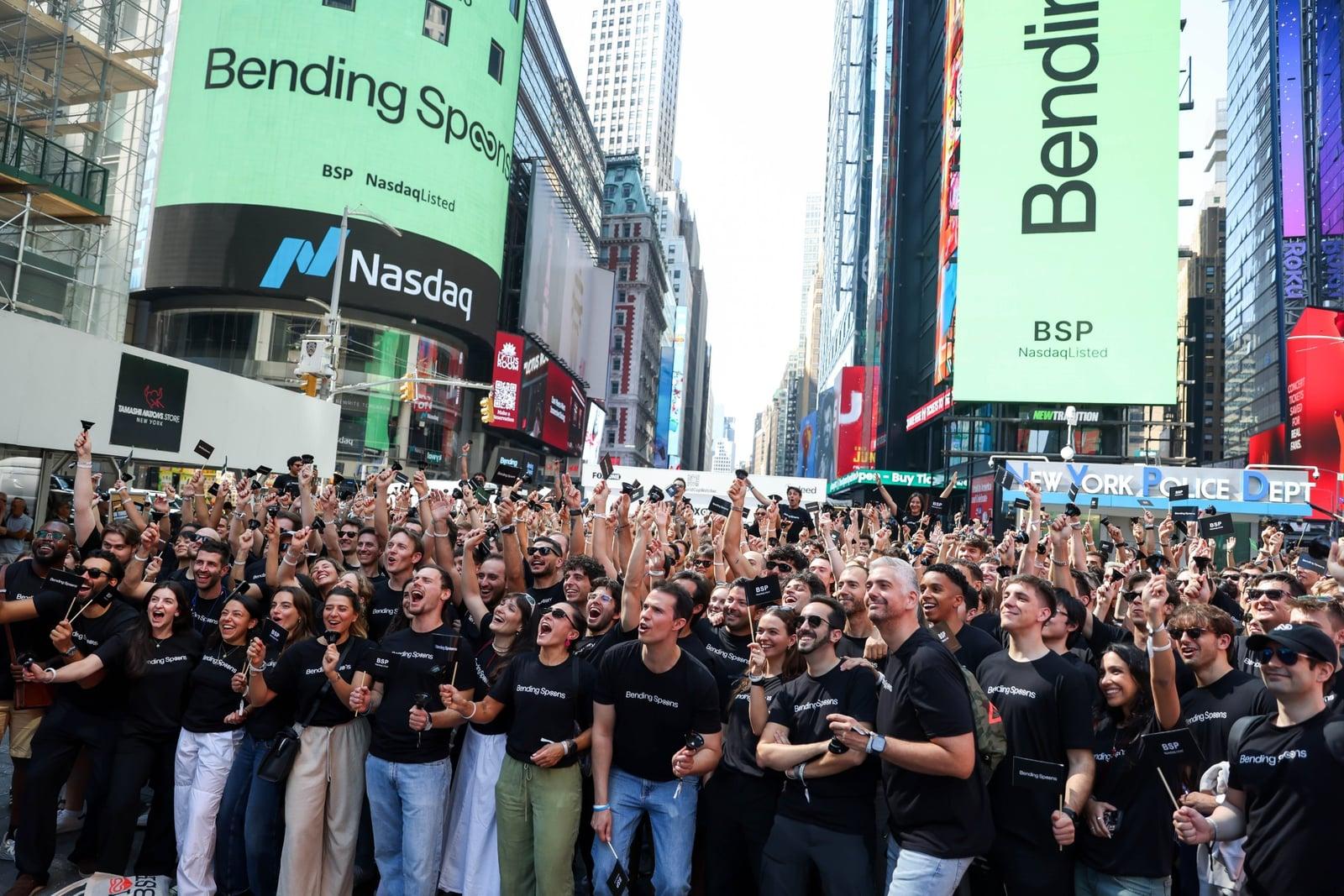
On the same day, BofA Global Research published a report that put concrete numbers on the risk. The analysts focused on Bending Spoons, the Italian technology group known for acquiring once-popular digital products such as Evernote, Eventbrite, Vimeo, WeTransfer, and AOL.
Their central argument was simple. People keep paying for subscriptions they barely use because cancelling is inconvenient. Researching alternatives, exporting notes, or moving files takes effort. An agent removes that effort. "Inconvenience is the main moat against AI," the analysts wrote.
BofA estimated that 10% to 40% of payers may not use the products they subscribe to. For Bending Spoons, the bank rated about 29% of projected 2027 revenue as high risk from AI agents. The most exposed businesses were AOL, where AI can evaluate bundled security add-ons and replace tech-help subscriptions; Eventbrite; and Evernote, where AI assistants become what the report called a "new second brain." WeTransfer was rated medium risk, while Vimeo was rated low risk because large video libraries are difficult to migrate and AI may encourage more video creation.
Early numbers do not yet show disruption
Bending Spoons pushed back on the idea that agents are already eroding its business. "We closely monitor our businesses' KPIs and haven't seen any signs that AI agents are driving cancellations or switching to alternative products," a company spokesperson told Fortune.
The BofA analysts largely agreed that the effect is not visible at scale yet. They said they had not tracked data to test their hypotheses and that the savings from cancelling services such as AOL, WeTransfer, Evernote, Eventbrite, or Vimeo typically range from about $228 to $728 a year. That amount, they noted, is roughly equivalent to a weekly cup of coffee, suggesting that the value gained from switching rarely exceeds the cost of staying put.
Despite that, the bank maintained an Underperform rating on Bending Spoons with a $38 price objective against a share price near $41. The call was driven partly by valuation and partly by questions over whether the company can keep acquiring businesses at the returns it targets. Bending Spoons carried net debt equal to 205% of equity at the end of 2025, according to BofA, and has recently agreed deals for Airtable and Miro worth more than $1 billion each.
A historical echo
UBS cited a Fortune cover story from February 2000 that asked, "How Much Are Your Eyeballs Worth?" At the peak of the dot-com boom, analysts were valuing internet companies by market capitalisation per pair of eyeballs. Lycos, the story noted, was valued at $244 per pair. The article's verdict was that eyeballs are not earnings.
A quarter of a century later, the concern has flipped. The next visitor to a website may not have eyeballs at all. If agents become the primary intermediaries between consumers and businesses, the metrics that powered the digital economy, attention, engagement, and ad impressions, may lose some of their meaning.
Bending Spoons reports third-quarter results on November 20. The numbers will offer the first real test of whether its customers are still staying put, or whether the agents have already started to do the switching for them.