
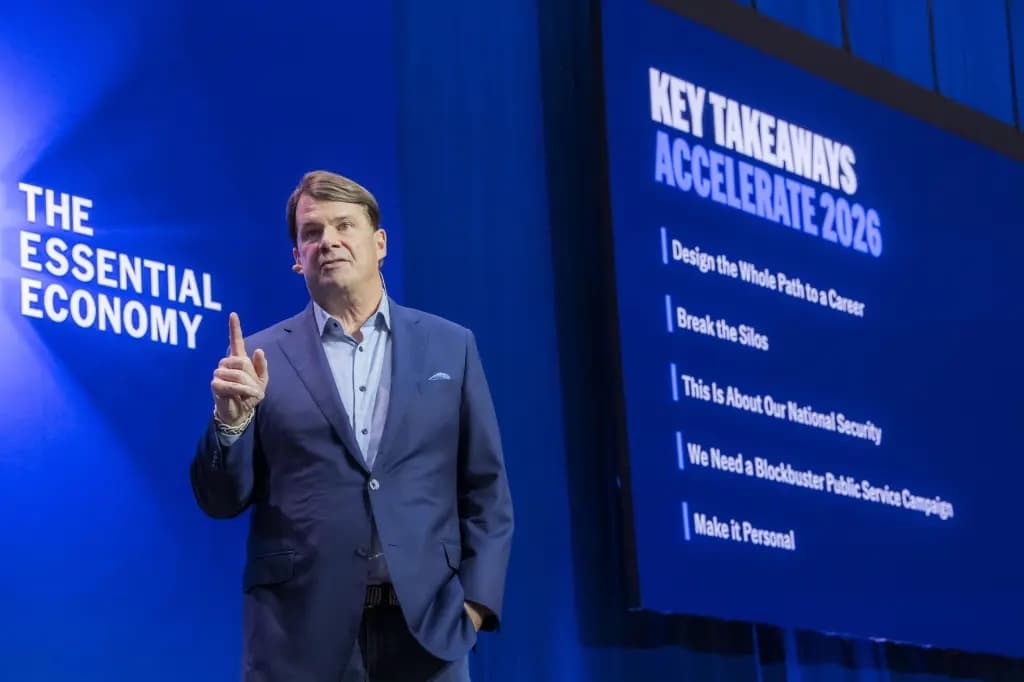
Ford CEO Jim Farley is making the case that Gen Z's path to a stable, well-paying career runs through the trades rather than a four-year degree, and he's framing it as more than just a hiring pitch for his own company. At a recent event centered on what he calls the essential economy, Farley argued that skilled blue-collar work, from electricians to auto technicians, offers younger workers a faster, cheaper route to solid pay than college debt and an uncertain white-collar job market.
Farley's argument leans on a labor shortage that has been building for years: as older tradespeople retire, too few younger workers are entering fields like manufacturing, construction, and vehicle repair to replace them, even as demand for those skills stays strong. He described the gap as a national security and economic issue, not just a staffing headache for individual employers, arguing that the country needs a coordinated push, not scattered local apprenticeship programs, to steer more young people toward technical careers.
Part of Farley's pitch is deliberately aimed at reshaping how trades are perceived culturally. He called for breaking down the silos between high schools, community colleges, and employers so that a career path into skilled trades looks as clearly mapped out and aspirational to a teenager as the traditional college track, rather than feeling like a fallback option.
The push comes as automakers and manufacturers more broadly grapple with a widening skills gap just as reshoring and automation investment ramp up domestic production. Farley's comments add a prominent corporate voice to a growing chorus, including some economists and policymakers, arguing that fixing the trades pipeline matters as much to the broader economy as any single company's hiring needs.