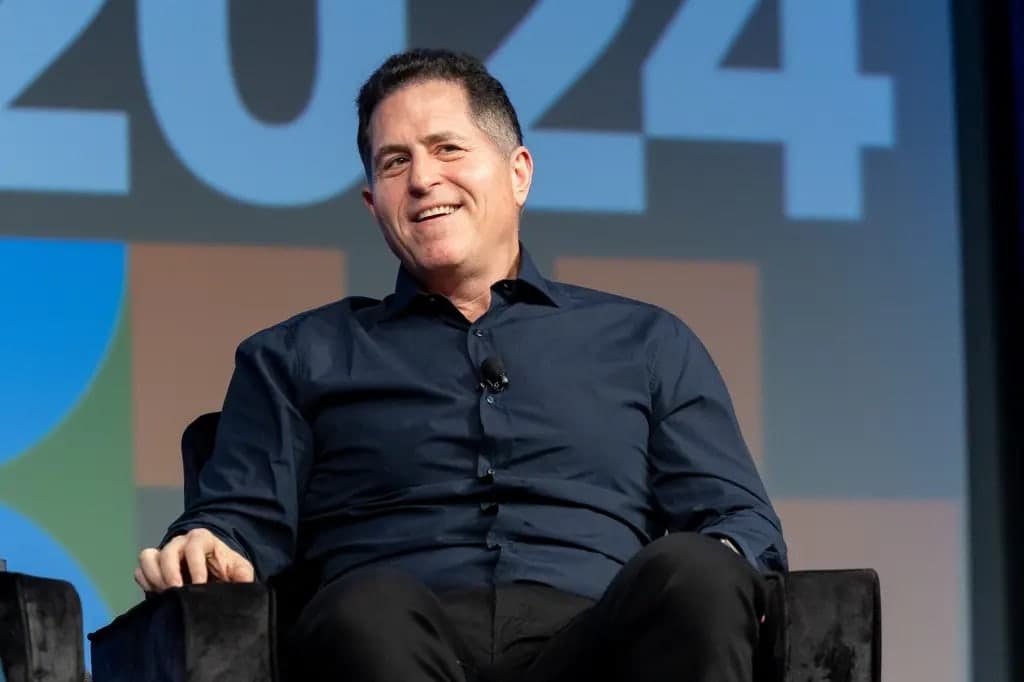
Michael Dell Started With $1,000 in a Dorm Room. Dell Is Now Worth $302 Billion
Michael Dell built what's now a $302 billion company out of a University of Texas dorm room, and his advice to founders is to trust your own instincts rather than ask everyone else if your idea is good.
Michael Dell built what's now a $302 billion company out of a University of Texas dorm room in 1983, starting with $1,000 in capital and three employees he's since described as "three guys with screwdrivers." The original business was simple: selling computer upgrade kits to fellow students, a far cry from the global technology company Dell Technologies has become.
Dell's instinct for direct marketing predates the company itself. In high school, he ran a newspaper subscription business that brought in $18,000 a year by using public records to target newlyweds specifically, a demographic he figured was likely to need a new subscription at their new address. He carried that same direct-to-customer logic into the computer business, cutting out retailers and selling straight to buyers, an approach that was unusual for the industry at the time.
He became the youngest CEO in the Fortune 500 at 27, in 1992, and by 2001 Dell had grown into the world's largest personal computer maker. He took the company private in 2013 in a $24.4 billion deal, then bought EMC for $67 billion in 2015 before bringing Dell back public in 2018 at a $16 billion market valuation. As of October 2026, that market value has climbed to $302 billion, and Dell's own net worth is estimated at $234 billion by the Bloomberg Billionaires Index.
Dell's advice to entrepreneurs centers on trusting one's own instincts over outside validation. "If you want to really make it big, you better come up with something unique," he says, adding that founders shouldn't simply "go ask" other people whether an idea is good before committing to it. He frames risk-taking and the near-certainty of failure as a basic cost of doing anything innovative, pointing to his own company's practice of funding hundreds of R&D projects at once, fully expecting that most of them won't pan out.
Reported by Fortune. This article summarizes and links to the original reporting.